Kleparz was a separate town before Krakow swallowed it in 1792. It had its own market square, its own church, its own craftsmen. Even now, walk five minutes north from the main station and the rhythm changes: the tourist stream splits south toward Florianska, and Kleparz carries on at its own pace, selling vegetables and oscypek the way it has done for six centuries.
This is a full day spent entirely in the district, from morning coffee to an evening drink. Everything is walkable within fifteen minutes. The only rule: get to the market before ten, because that is when the best produce disappears.
Coffee and breakfast at Bruk Cafe
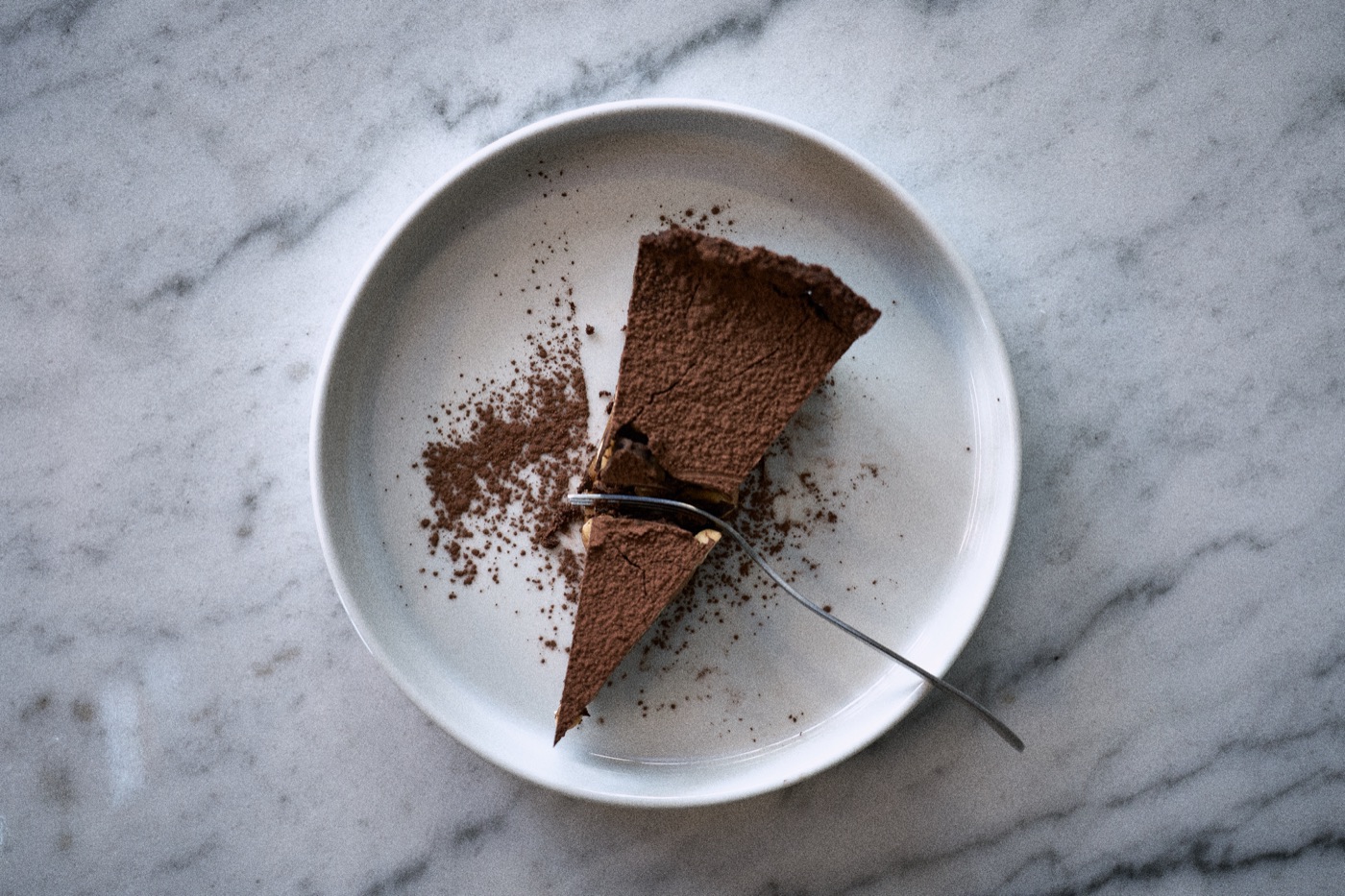
Start the day properly. Bruk sits on Krotka, a side street between the station and the market, and it opens at nine. Specialty coffee, a basque cheesecake that has become a quiet obsession on this site, and breakfast plates served until noon. Sit near the window and watch Kleparz wake up: the market vendors are already setting up, the office workers are heading for the tram, and you have nowhere to be except the next paragraph of this itinerary.
Stary Kleparz market
A three-minute walk from Bruk: Krakow's oldest market, operating on the same square for over six hundred years. The stalls sell seasonal vegetables, local cheeses, smoked meats, honey, fresh herbs, bread and flowers. Prices are consistently below supermarket rates, because this is where locals actually shop, not where tourists buy fridge magnets.
The trick is timing. By ten the stalls are fully stocked and the morning crowd has thinned. By noon the best produce is gone. Buy what looks good, ask the cheese seller for a tasting of oscypek (they expect it), pick up a loaf of sourdough, and move on before the afternoon heat settles over the square.
Open Monday to Friday 6:00 to 18:00, Saturday 6:00 to 16:30. Closed Sunday.
Plac Matejki and the Grunwald Monument
Walk north through the market and you hit plac Matejki, the grand square that Kleparz built when it was still a town with ambitions. In the center stands the Grunwald Monument: King Wladyslaw Jagiello on horseback, celebrating the 1410 battle where Polish and Lithuanian forces defeated the Teutonic Knights. The current monument is a 1976 reconstruction. The Nazis destroyed the original in 1940, knowing exactly what it meant. At its base sits the Tomb of the Unknown Soldier.
On the east side, the Academy of Fine Arts watches over the square. On the north, St. Florian's Basilica, where a young Karol Wojtyla served as curate in 1949 before becoming Pope John Paul II. You do not need to go inside to appreciate the context: this square was the civic heart of a town that predates Krakow's municipal charter.
The Barbican
South from plac Matejki, the Barbican appears: a circular fortified outpost built between 1498 and 1499, once the first line of Krakow's defenses. Today it is the strongest surviving element of the medieval fortifications, a hulking brick cylinder that makes every building around it look temporary.
Open April to October, daily 10:30 to 18:00 (closed every second Monday). A combined ticket covers the Barbican and the adjacent Defence Walls for a walk along the old ramparts. In winter it is closed, but the exterior alone is worth the five-minute detour on the way to lunch.
Lunch at Restauracja Atrium
Back into the Kleparz streets, Atrium sits on Krzywa, a quiet road that runs parallel to the market. Polish cuisine with European polish: zurek, pierogi ruskie, slow-roasted pork rib, beef tenderloin. The kitchen sources ingredients from the market you just walked through, which means the menu shifts with the season in a way that is not performative but practical. A hundred-odd zloty per person for a full lunch with a glass of wine.
Afternoon cake and a walk
After lunch, two options. If you still have appetite, walk south to Cukiernia BiBulka on Karmelicka for the Dubai chocolate that our Kleparz guide rated 9/10: kadayif, pistachio cream, chocolate that snaps. If you need to move, Kleparski Park sits north of the market with benches, shade and a dog run, which is useful information if you read our dog-friendly guide.
The afternoon in Kleparz has a particular quality: the market is winding down, the restaurants have not opened for dinner yet, and the streets belong to residents walking home. Use this hour the way locals do: slowly.
Evening at Forty Kleparz
Kleparz is not a nightlife district, which is one of its selling points. But it does have Forty Kleparz on Kamienna: a restobar with an international menu, craft cocktails, a private courtyard terrace and, on weekends, live music. It is the kind of place that works equally well for a quiet dinner with wine or a longer evening that drifts into cocktails.
The courtyard is the draw in summer: enclosed, candlelit, separated from the street. In winter, the interior is warm and the cocktail list does not change with the season. After nine, you can walk back to the station in five minutes, or south through the Planty to the Old Town in ten. Either way, you spent a full day in a district most visitors never see, and you ate better than most of them did on the Main Square.
What Kleparz was
The settlement predates 1184, when Bishop Gedko built St. Florian's Church. By the fourteenth century it was a town in its own right, known as Florencja, with its own market charter from Casimir the Great. It never had walls, which made it vulnerable: the town burned down in 1476, 1528, 1655, 1657, 1755 and 1768. Each time it was rebuilt. In 1792 the Great Sejm incorporated it into Krakow, ending six centuries of nominal independence.
The medieval horse market became the vegetable market you walked through this morning. The craftsmen's quarter became the cafe scene. The civic square became plac Matejki. The town is gone but the bones are still here, and a day spent walking them is the best argument for stepping off the Main Square.
For the full food and coffee guide to the district, with five reviewed venues, see our Kleparz guide.
Questions people actually ask me
Is Kleparz worth visiting?
Yes. It is five minutes from the main station and has the city's oldest market, the Barbican, a growing cafe scene, and none of the crowds that define the Old Town a few hundred meters south.
What is Stary Kleparz and when is it open?
Krakow's oldest operating market, over 600 years old. Sells seasonal produce, local cheeses, smoked meats, honey, bread and flowers at local prices. Monday to Friday 6:00 to 18:00, Saturday 6:00 to 16:30, closed Sunday. Best produce is gone by 10 AM.
Can I visit the Barbican in winter?
No. The interior is open April to October only, daily 10:30 to 18:00 except every second Monday. But the exterior is a medieval fortification visible year-round, and the walk along the adjacent Defence Walls runs on the same seasonal schedule.
What else is near Krakow main station besides the Old Town?
Kleparz, immediately north, has the Stary Kleparz market, the Barbican, plac Matejki with the Grunwald Monument, and cafes like Bruk on Krotka. Most visitors walk south from the station and miss everything to the north.